
Regulates Your Sleep Comfort | Impacts Sleep Quality and Health | Common Temperature Challenges for Sleep | Tips to Optimise Temperature for Better Sleep | FAQ |
Quick Answer
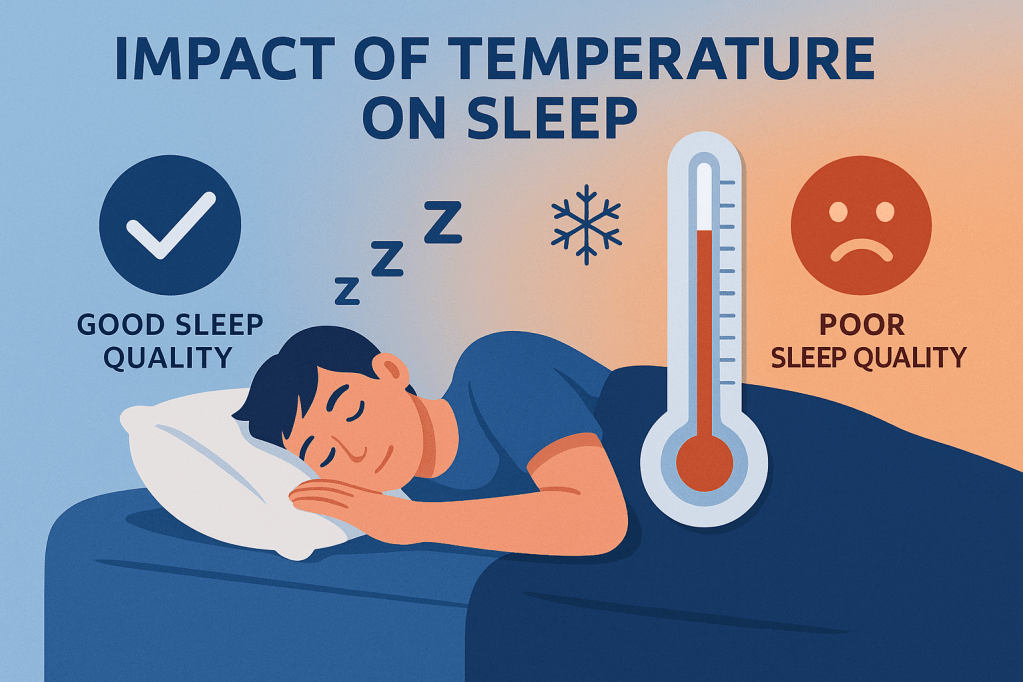
Temperature is a major factor in sleep quality. Keeping your bedroom cool, ideally between 16–20°C, helps your body regulate its internal clock, reach deeper sleep stages, and wake up feeling more refreshed. Both heat and cold can disrupt your rest and cause fatigue, but simple adjustments can make a big difference.
Introduction
Temperature can greatly influence how well you sleep each night. It affects your body’s ability to regulate its internal clock and reach deep sleep stages. Extreme heat or cold can disrupt your rest, leading to fatigue. This page explores temperature’s impact on sleep and offers practical tips to improve your rest.
Understanding Temperature’s Effect on Sleep
1. Regulates Your Sleep Comfort
Temperature plays a key role in how comfortable you feel while sleeping. Your body naturally cools down at night to prepare for rest, dropping by a few degrees. A bedroom that’s too hot or cold can stop this process, making sleep harder. The ideal temperature helps you fall asleep faster and stay asleep longer.
- A bedroom temperature of 16–20°C helps your body cool down, promoting deeper and more restful sleep.
- Extreme temperatures above 24°C can reduce your deep sleep by 15%, making you wake up feeling tired.
2. Impacts Sleep Quality and Health
An unsuitable sleep environment temperature can lower your sleep quality and affect your health. You might wake up often, feel restless, or struggle to reach restorative sleep stages. Over time, this can increase stress and weaken your immune system. Keeping the right temperature supports better sleep and overall wellbeing.
- High temperatures increase wakefulness, leading to fragmented sleep and less time in deep sleep stages.
- Poor sleep from temperature issues raises your risk of stress-related health problems over time.
3. Common Temperature Challenges for Sleep
Various temperature challenges can disrupt your sleep, often without you noticing their impact. Hot summer nights, cold winter bedrooms, or inconsistent heating can cause issues. Even small fluctuations from a thermostat can affect sensitive sleepers. Recognising these challenges helps you create a better sleep environment.
- Hot nights above 26°C disturbs sleep for 25% of people, causing more awakenings and lighter sleep.
- Cold bedrooms below 12°C make it harder to fall asleep, delaying sleep onset by 15 minutes on average.
4. Tips to Optimise Temperature for Better Sleep
You can improve your sleep by managing your bedroom temperature effectively. Set your thermostat to a cool, comfortable range and use breathable bedding to stay relaxed. Dress in light, moisture-wicking sleepwear to avoid overheating at night. These steps help you sleep more deeply and wake up refreshed.
- Setting your bedroom to 18°C can improve sleep quality, helping you feel more rested daily.
- Breathable bedding like cotton reduces overheating, helping you maintain a stable body temperature through the night.
In Summary
Temperature affects your sleep comfort, quality, and overall health significantly. Extreme heat or cold can disrupt your rest and lead to fatigue.
Optimise your bedroom temperature, use breathable bedding, and wear light sleepwear for better sleep. These habits help you rest deeply and improve your daily wellbeing.
FAQ
What is the best bedroom temperature for sleep?
Most experts recommend keeping your bedroom between 16–20°C for optimal sleep quality.
How does temperature affect deep sleep?
If your room is too hot or too cold, you’ll spend less time in deep, restorative sleep stages, which can lead to daytime tiredness.
Can changing my bedding or sleepwear help?
Yes. Using breathable bedding and lightweight, moisture-wicking sleepwear helps your body regulate temperature and prevents overheating.
What if I can’t control my bedroom temperature?
Use fans, air conditioning, or heating as needed, and choose bedding materials that help you stay comfortable throughout the night.
 Casually Healthy