
Influences Your Food Choices | Benefits of Good Sleep for Healthy Eating | Risks of Poor Sleep on Eating Habits | Tips to Improve Sleep for Better Food Choices | FAQ |
Quick Answer
Sleep quality directly affects your food choices by altering hunger hormones and brain function. Good sleep reduces cravings for unhealthy foods and supports better nutrition, while poor sleep increases calorie intake and emotional eating. Prioritizing 7–9 hours of rest nightly helps regulate appetite and improve dietary decisions.
Introduction
Sleep plays a surprising role in the food choices you make every day. It affects your brain’s ability to make decisions, control cravings, and prioritise healthy eating habits. Poor sleep can lead to unhealthy food decisions, while good sleep supports better nutrition. This page explores how sleep impacts your food choices and offers practical tips to improve your diet.
Understanding Sleep’s Effect on Food Choices
1. Influences Your Food Choices
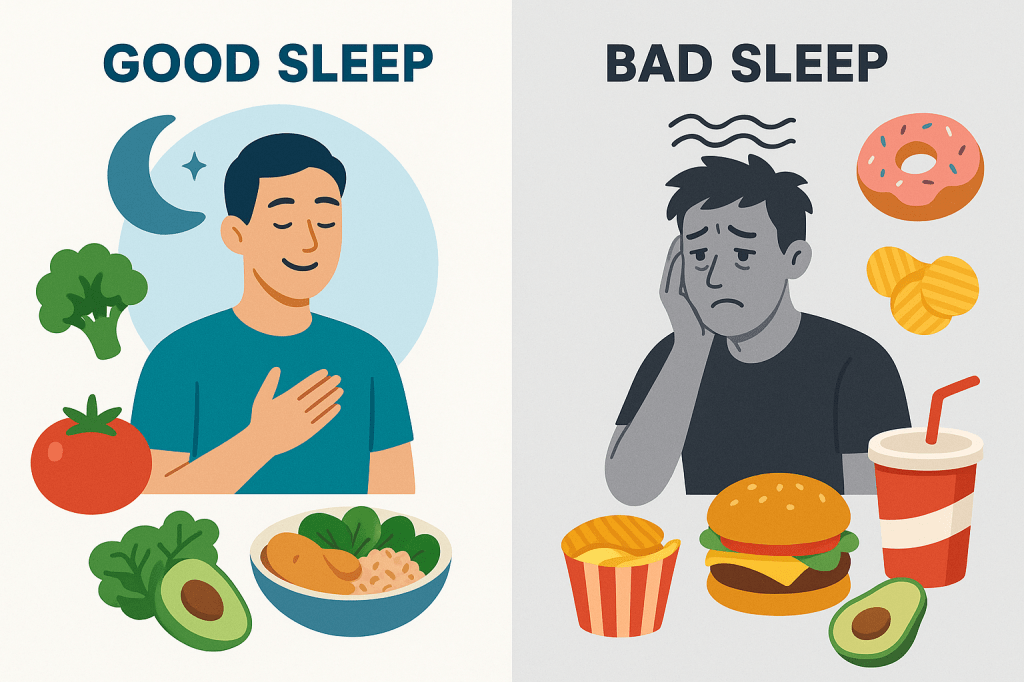
Sleep quality directly impacts your food choices by affecting your brain’s decision-making processes. When you’re well-rested, your prefrontal cortex, which controls willpower, functions better, helping you choose nutritious foods. Lack of sleep disrupts this area, making you more likely to crave sugary or fatty foods. This connection shows how sleep shapes your daily eating habits.
- Good sleep enhances your prefrontal cortex, improving your ability to resist unhealthy snacks.
- Poor sleep increases ghrelin, the hunger hormone, making you crave high-calorie foods more often.
2. Benefits of Good Sleep for Healthy Eating
Getting enough quality sleep helps you make healthier food choices and maintain a balanced diet. It regulates appetite hormones, reducing cravings for processed foods and sugary snacks. You’re more likely to choose fruits, vegetables, and whole grains when well-rested. Good sleep also supports better energy levels, making meal planning easier.
- Quality sleep reduces appetite, helping you avoid overeating and choose nutrient-rich foods.
- Well-rested individuals consume more vegetables compared to those with poor sleep patterns.
3. Risks of Poor Sleep on Eating Habits
Poor sleep can lead to unhealthy eating habits by disrupting your body’s hunger signals and emotional regulation. You might eat more junk food to cope with stress or fatigue caused by lack of rest. Over time, this can contribute to weight gain and poor nutrition. Sleep deprivation also makes it harder to resist impulsive food choices.
- Sleep deprivation increases calorie intake by 385 calories daily, often from high-fat, sugary foods.
- Lack of sleep raises emotional eating, leading to more frequent unhealthy snacking.
4. Tips to Improve Sleep for Better Food Choices
Improving your sleep can help you make better food choices and support a healthier diet. Stick to a consistent sleep schedule to regulate your body’s hunger hormones effectively. Create a calming bedtime routine to reduce stress and improve sleep quality. These habits can lead to more mindful eating and better nutrition overall.
- A regular sleep schedule lowers ghrelin levels, reducing cravings for unhealthy foods.
- A calming bedtime routine improves sleep quality, helping you make better food decisions.
In Summary
Sleep impacts your food choices by influencing cravings and decision-making abilities. Good sleep promotes healthier eating, while poor sleep increases the risk of unhealthy food decisions.
Improve your sleep with a consistent schedule and calming routine for better nutrition. These steps help you make mindful food choices and support overall wellbeing.
FAQ
How does sleep affect sugar cravings?
Sleep deprivation increases ghrelin and reduces leptin, heightening cravings for sugary, energy-dense foods.
Can improving sleep help with weight loss?
Yes. Restoring sleep patterns reduces calorie intake by 300–400 kcal/day and improves metabolic health.
What foods promote better sleep?
Foods rich in magnesium (spinach, almonds), tryptophan (turkey, nuts), and melatonin (cherries, oats) support sleep quality.
How long does it take to see changes in food choices after improving sleep?
Most people notice reduced cravings and better meal decisions within 1–2 weeks of consistent sleep.

