
Minimum Three Sets | Using Supersets | Reps Close to Failure | Final Drop Set | FAQ |
Quick Answer
For optimal muscle growth, perform at least three sets per exercise, use supersets for efficiency, train most sets with 1–3 reps left before failure, and occasionally finish with a drop set. These evidence-based techniques maximize hypertrophy, strength, and workout efficiency for lifters at any level.
Introduction
Weight lifting is a powerful way to build strength, improve fitness, and enhance overall health for the average person. Understanding the ideal number of repetitions (reps) and sets can maximise muscle growth and efficiency. This page explores evidence-based techniques, such as supersets and drop sets, to optimise your workout. These methods are accessible, effective, and designed to help you achieve your fitness goals safely.
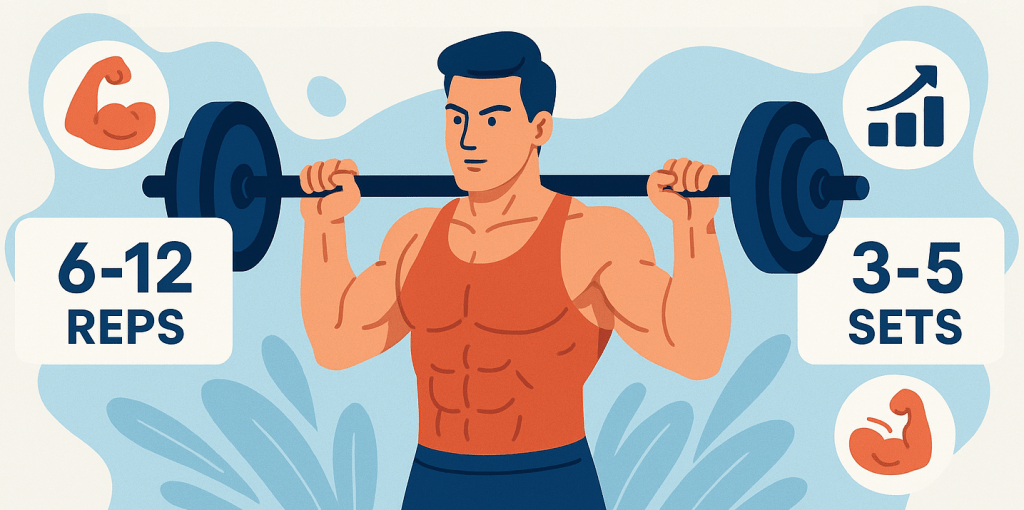
Optimising Your Weight Lifting Routine
Minimum Three Sets per Exercise
Performing at least three sets per exercise ensures adequate muscle stimulation for growth and strength. This approach allows progressive overload, gradually increasing the demand on muscles. It’s suitable for beginners and advanced lifters, promoting endurance and hypertrophy. Multiple sets also improve workout consistency and measurable progress over time.
- Consistent three-set workouts increase muscle strength by 15–20% over 12 weeks.
- This method enhances training endurance for sustained performance.
Using Supersets for Efficiency
Lifting with 1–3 reps left before failure maximises muscle fibre recruitment and growth. This method pushes muscles to adapt without risking injury from complete exhaustion. It’s effective for building strength and endurance across fitness levels. Proper form is crucial to ensure safety and effectiveness.
- Supersets improve workout efficiency by reducing session time without sacrificing gains.
- This approach boosts cardiovascular health through increased intensity.
Reps Close to Failure
Lifting with 1–3 reps left before failure maximises muscle fibre recruitment and growth. This method pushes muscles to adapt without risking injury from complete exhaustion. It’s effective for building strength and endurance across fitness levels. Proper form is crucial to ensure safety and effectiveness.
- Training near failure promotes significant muscle growth with consistent practice.
- This technique enhances lifting strength for functional tasks.
Final Drop Set to Near Failure
A drop set involves performing the final set to near failure, then reducing the weight and continuing until near failure again, typically with 1–2 weight reductions. This technique intensifies muscle fatigue, promoting hypertrophy and endurance. It’s best for experienced lifters to avoid overtraining or injury. Always prioritise proper form and avoid pushing beyond safe limits.
- Drop sets enhance muscle hypertrophy for a sculpted physique.
- This method improves workout intensity for advanced lifters.
In Summary
Ideal weight lifting reps involve at least three sets per exercise, using supersets, reps close to failure, and a final drop set to maximise muscle growth and strength. These techniques are efficient, adaptable, and backed by research showing significant gains in hypertrophy and endurance.
Start with three sets, incorporate supersets for efficiency, aim for 1–3 reps shy of failure, and use drop sets cautiously. Always prioritise form and safety to achieve sustainable results.
FAQ
How many reps should I do for muscle growth?
Aim for 6–12 reps per set for hypertrophy, adjusting weight so you finish each set with 1–3 reps left in the tank.
How often should I use drop sets or supersets?
Use supersets regularly for efficiency, but limit drop sets to 1–2 exercises per workout to avoid overtraining.
Can beginners use these techniques?
Yes, but start with three sets per exercise and master proper form before adding advanced methods.
What’s the difference between training to failure and near failure?
Training to near failure means stopping 1–3 reps before you cannot complete another rep with good form, reducing injury risk while maximizing growth.

