What is Straight Dieting? | What are Cheat Days? | Metabolic and Psychological Effects | Results: Body Weight, Fat, and Muscle | FAQ |
Quick Answer
Straight dieting involves continuous calorie restriction, while cheat days introduce planned breaks with higher calorie intake. Research and real-world experience show that cheat days can improve diet adherence, help maintain metabolism, and may better preserve muscle mass, though results vary by individual.
Introduction
Some people can stick to a restrictive diet indefinitely, but most cannot. The best diet is the one you can maintain for life. Comparing straight dieting to approaches that include cheat days or breaks helps clarify which strategy might be more sustainable and effective for weight loss, body composition, and long-term success.
Understanding Dieting Approaches
What is Straight Dieting?
Straight dieting means following a continuous calorie-restricted plan without scheduled breaks or indulgences. This approach can lead to steady weight loss if adhered to, but over time, it may cause metabolic adaptation, increased cravings, and a higher risk of diet fatigue.
- Continuous restriction can lower metabolic rate and increase hunger hormones.
- Some people can maintain this approach, but many find it difficult over the long term.
- Strict adherence may increase the risk of regaining weight after the diet ends.
What are Cheat Days?
Cheat days are planned breaks from a restrictive diet, where you eat above your normal calorie intake—often once per week or in cycles. The goal is to provide psychological relief, boost metabolism, and make the diet more sustainable.
- Cheat days can raise leptin levels and temporarily increase metabolic rate.
- Research shows cheat days can improve diet adherence by 23% compared to continuous dieting.
- For some, cheat days reduce cravings and help prevent binge eating.
Metabolic and Psychological Effects
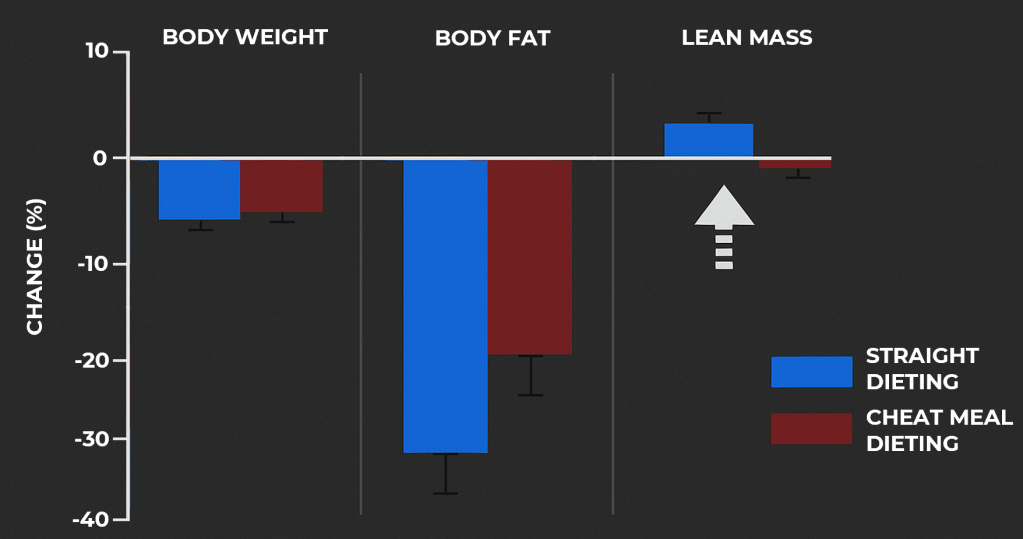
The attached image and recent studies highlight key differences between continuous dieting and diets with breaks or cheat days. Diet breaks or cheat days can help maintain a higher metabolic rate and support better psychological wellbeing, but the benefits depend on how they are implemented.
- Diet breaks can prevent metabolic slowdown and help sustain weight loss.
- Cheat days may reduce feelings of deprivation and improve long-term adherence.
- For some, cheat days can trigger loss-of-control eating, so individual response matters.
Results: Body Weight, Fat, and Muscle
The attached image shows a comparison between continuous dieting (Group 1) and dieting with breaks (Group 2). Participants who took regular breaks or cheat days lost more body fat, preserved more lean mass, and experienced better long-term results compared to those who dieted continuously.
- Diets with breaks led to greater fat loss and muscle preservation.
- Continuous dieting resulted in slower fat loss and more muscle loss.
- Cheat days or diet breaks may help prevent weight regain after the diet ends.
In Summary
While some people can stick to straight dieting, most benefit from planned cheat days or breaks. These strategies can improve adherence, help maintain metabolism, and better preserve muscle mass during weight loss. The best diet is the one you can sustain for life.
FAQ
Are cheat days better than straight dieting for everyone?
No, but cheat days or breaks are more sustainable for most people and improve long-term success rates. However, they may not suit those with a history of binge eating or certain medical conditions.
Can cheat days slow my progress?
If overdone, cheat days can offset your calorie deficit. Planned, moderate cheat meals are more effective than full days of uncontrolled eating.
How often should I include cheat days or breaks?
Research suggests a cheat meal or a short break once per week or every few weeks can be beneficial, but the frequency should be tailored to your needs and goals.
Do cheat days help with muscle preservation?
Yes, regular breaks or cheat meals can help preserve lean mass during weight loss, especially when combined with resistance training and adequate protein.

