
Disrupts Your Sleep Quality | Impacts Health and Wellbeing | Common Causes of Snoring | Tips to Reduce Snoring for Better Sleep | FAQ |
Quick Answer
Snoring disrupts sleep quality, reduces restorative deep sleep, and increases health risks like hypertension. Solutions include side sleeping, weight management, and avoiding alcohol.
Introduction
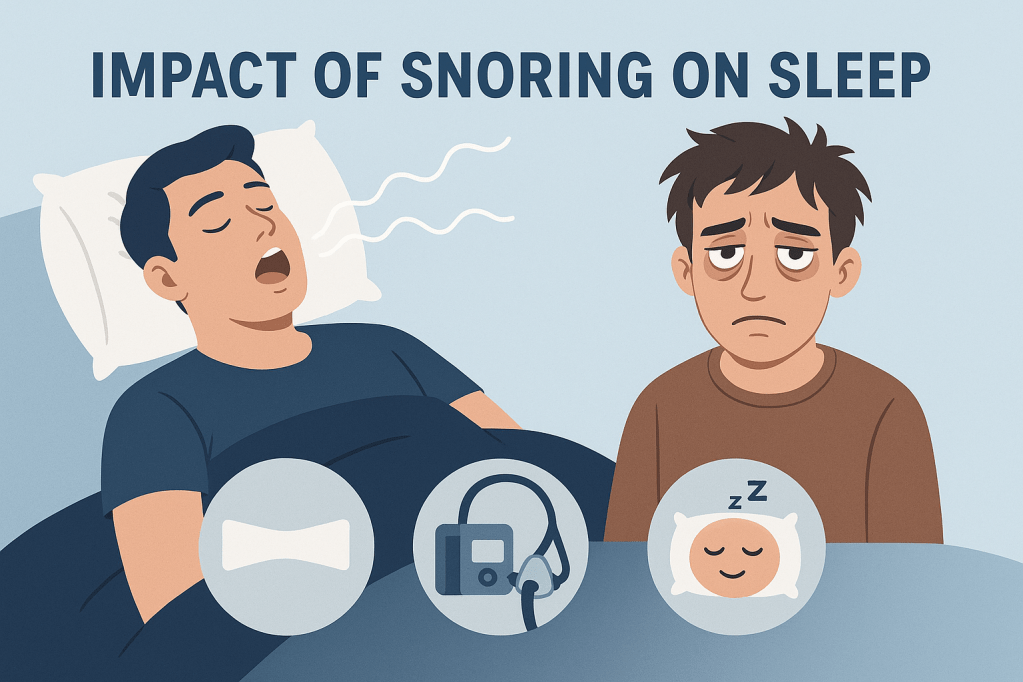
Snoring can significantly affect the quality of your sleep and overall wellbeing. It disrupts your rest, leading to fatigue and other health challenges over time. Whether it’s your snoring or a partner’s, the noise can prevent deep, restorative sleep. This page explores snoring’s impact on sleep and offers solutions to improve your rest.
Understanding Snoring’s Effect on Sleep
1. Disrupts Your Sleep Quality
Snoring disrupts sleep by causing frequent awakenings or preventing you from reaching deeper sleep stages. The noise can disturb both the snorer and their partner, leading to fragmented rest. This interruption affects your sleep cycle, reducing the time spent in restorative sleep phases. As a result, you may wake up feeling tired and unrested.
- Snoring can wake most people up 5 times per night, reducing overall sleep quality significantly.
- It decreases time in deep sleep, leaving you less refreshed and more fatigued daily.
2. Impacts Health and Wellbeing
Snoring can have serious effects on your physical and mental health beyond just poor sleep. It may contribute to daytime fatigue, irritability, and difficulty concentrating on tasks. Chronic snoring is also linked to health issues like high blood pressure and heart problems. Over time, these effects can lower your overall quality of life.
- Chronic snoring increases the risk of high blood pressure due to repeated oxygen drops.
- It raises stress levels, impacting mental health and leading to mood swings.
3. Common Causes of Snoring
Snoring is often caused by physical or lifestyle factors that affect your airways during sleep. Sleeping on your back, excess weight, or nasal congestion can narrow your airway, leading to vibrations. Alcohol consumption and smoking also relax throat muscles, worsening snoring. Identifying these causes is the first step to addressing the issue effectively.
- Sleeping on your back increases snoring likelihood, as your tongue blocks the airway.
- Excess weight contributes to snoring in many cases, due to added pressure on the throat.
4. Tips to Reduce Snoring for Better Sleep
You can reduce snoring and improve your sleep with practical lifestyle changes and habits. Try sleeping on your side to keep your airway open and reduce vibrations. Maintain a healthy weight and avoid alcohol before bed to lessen snoring. Using nasal strips or consulting a doctor for severe cases can also help.
- Side sleeping reduces snoring, helping you and your partner enjoy better sleep quality.
- Avoiding alcohol before bed decreases snoring frequency, improving your overall rest.
In Summary
Snoring disrupts your sleep quality, affecting both rest and overall health. It can lead to fatigue, stress, and serious health issues over time.
Reduce snoring by sleeping on your side, maintaining a healthy weight, and avoiding alcohol. These steps help you sleep better and improve your wellbeing.
FAQ
Can snoring be a sign of sleep apnea?
Yes. Loud snoring with breathing pauses may indicate obstructive sleep apnea.
Do nasal strips work for everyone?
They help 40–50% of users with nasal congestion.
How much weight loss reduces snoring?
Losing 5–10% of body weight significantly improves symptoms.
Is snoring genetic?
Yes. Family history increases risk due to inherited airway structures.
 Casually Healthy