
Regulates Your Sleep Cycle | Benefits of Natural Light | Negative Effects of Artificial Light | Tips to Manage Light for Better Sleep | FAQ |
Quick Answer
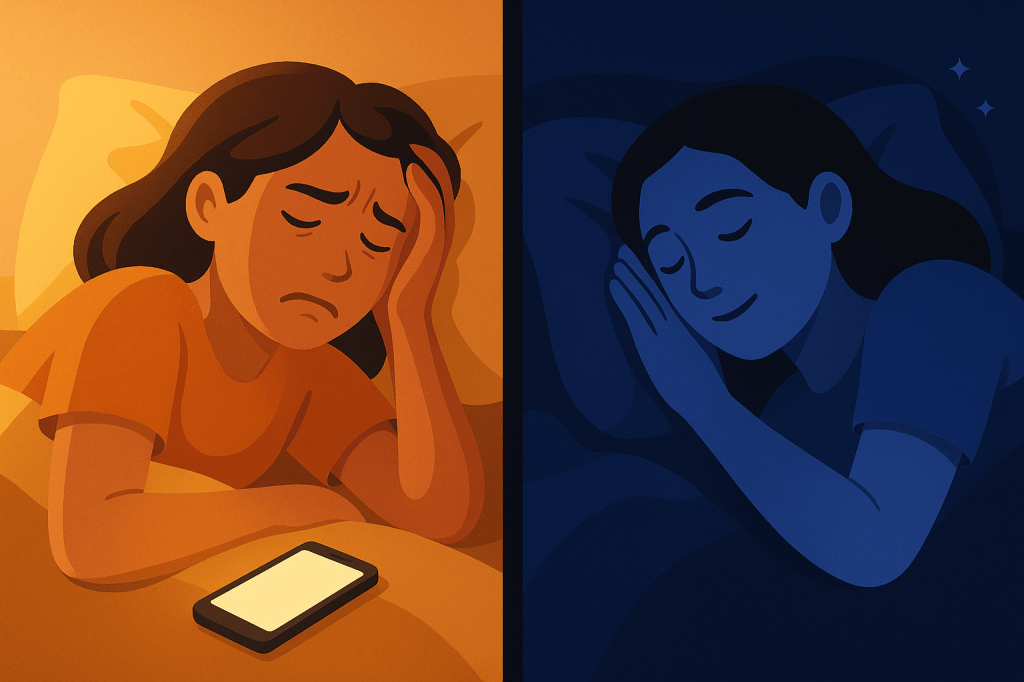
Light profoundly influences sleep quality by regulating your circadian rhythm and melatonin production. Morning sunlight exposure improves sleep quality, while evening blue light from screens can delay sleep onset by up to 2 hours. Managing light exposure by getting bright light in the morning and dimming lights at night is essential for healthy, restorative sleep.
Introduction
Light plays a powerful role in how well you sleep each night. It affects your circadian rhythm, the internal clock that controls your sleep-wake cycle. Exposure to different types of light can either help or disrupt your rest. This page explores light’s impact on sleep and how to manage it for better health.
Understanding Light’s Role in Sleep
Regulates Your Sleep Cycle
Light is a key signal for your circadian rhythm, telling your body when to wake up or sleep. When light enters your eyes, it affects a brain area called the suprachiasmatic nucleus. This area controls melatonin, a hormone that makes you feel sleepy. The right light exposure helps you maintain a healthy sleep pattern.
- Bright light in the morning stops melatonin production, helping you feel alert and ready for the day.
- Darkness at night significantly boosts melatonin, making it easier for you to fall asleep and rest deeply.
Benefits of Natural Light
Natural light, like sunlight, helps you sleep better by keeping your circadian rhythm in sync. Morning sunlight exposure signals your body to wake up and stay active. It also improves your mood and energy during the day. Regular sunlight can lead to deeper, more restful sleep at night.
- Morning sunlight for 30 minutes increases daytime alertness and helps you fall asleep faster at night.
- Daily sunlight exposure improves sleep quality, helping you wake up feeling refreshed and energised.
Negative Effects of Artificial Light
Artificial light, especially blue light from screens, can disrupt your sleep by delaying your circadian rhythm. It suppresses melatonin production, making it harder to fall asleep. Late-night exposure to artificial light can leave you feeling tired the next day. This disruption may also affect your mood and overall health over time.
- Blue light from screens delays melatonin production by up to 2 hours, keeping you awake longer at night.
- Nighttime screen use reduces sleep quality, leading to more daytime fatigue and lower productivity.
Tips to Manage Light for Better Sleep
You can improve your sleep by managing your light exposure throughout the day. Get sunlight in the morning and avoid bright lights at night to support your circadian rhythm. Use dim, warm lights in the evening to prepare for rest. These habits help you fall asleep faster and wake up refreshed.
- Dim lights 2 hours before bed to increase melatonin, helping you fall asleep 30 minutes faster.
- Morning sunlight exposure for 30 minutes aligns your circadian rhythm, improving sleep quality and daily energy.
In Summary
Light shapes your sleep by regulating your circadian rhythm and melatonin production. Natural light helps you sleep better, while artificial light can disrupt your rest.
Manage light exposure to improve your sleep and overall health. Get morning sunlight and limit screen time at night for deeper, more refreshing rest.
FAQ
How much morning sunlight do I need for better sleep?
Aim for 15-30 minutes of direct sunlight exposure within an hour of waking for optimal benefits to your sleep-wake cycle.
Do blue light blocking glasses really work?
Research shows mixed results, but some studies indicate they can reduce subjective sleep onset time and nighttime awakenings when worn in the evening.
Can indoor lighting affect my sleep?
Yes, even standard indoor lighting (300 lux) can suppress melatonin production by up to 50% compared to dim light, potentially disrupting sleep.
How long before bed should I avoid screens?
Ideally, avoid screens 1-2 hours before bedtime to prevent melatonin suppression and allow your body to prepare naturally for sleep.
 Casually Healthy