
Mineral Sunscreen Overview | Chemical Sunscreen Overview | FAQ |
Quick Answer
Mineral sunscreens provide immediate protection, are safer for sensitive skin, and are environmentally friendly, but can be thicker and more expensive. Chemical sunscreens rub in easily, last longer, and are usually cheaper, but may irritate skin, disrupt hormones, take longer to work, and can harm the environment.

Introduction
Choosing the right sunscreen is essential for effective sun protection and skin health. Mineral and chemical sunscreens work differently and each has its own set of advantages and drawbacks. Understanding these differences helps you select the best product for your needs, skin type, and environmental concerns.
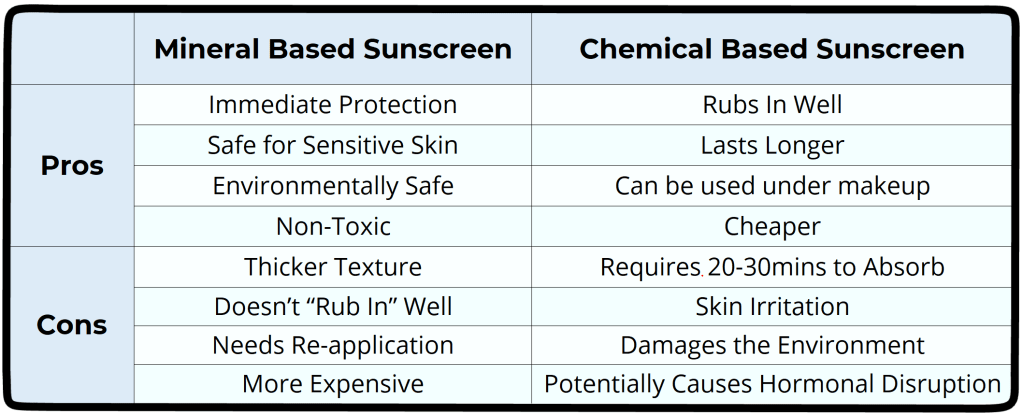
Sunscreen Comparison
Mineral Sunscreen Overview
Mineral sunscreens, also called physical sunscreens, use natural minerals like zinc oxide or titanium dioxide to create a barrier that reflects UV rays away from the skin. They are often recommended for people with sensitive skin or those seeking environmentally safe options.
Pros
- Provide immediate protection after application.
- Generally safe for sensitive skin.
- Considered environmentally safe
- General non-toxic to people.
Cons
- Have a thicker texture and may not rub in as well.
- Often require more frequent re-application.
- Typically more expensive than chemical options.
Chemical Sunscreen Overview
Chemical sunscreens absorb UV rays and convert them into heat, which is then released from the skin. These formulas tend to be lightweight and easy to apply, making them a popular choice for everyday use and under makeup.
Pros
- Rub in well and feel lighter on the skin.
- Last longer and can be used under makeup.
- Usually cheaper than mineral sunscreens.
Cons
- Require 20–30 minutes to absorb before becoming effective.
- Can cause skin irritation in some people.
- May damage the environment
- Can potentially cause hormonal disruption.
In Summary
Mineral sunscreens are ideal for sensitive skin and environmental safety but may feel heavier and cost more. Chemical sunscreens are lightweight, blend easily, and are budget-friendly, but may irritate skin, take longer to work, and have environmental drawbacks. Choose the sunscreen that best matches your needs and values.
FAQ
Which sunscreen is better for sensitive skin?
Mineral sunscreens are generally safer for sensitive or allergy-prone skin.
Do mineral sunscreens work immediately?
Yes, mineral sunscreens provide protection as soon as they are applied.
Are chemical sunscreens safe for the environment?
Some chemical ingredients can harm coral reefs and aquatic life. Mineral sunscreens are considered more environmentally friendly.
Can I use chemical sunscreen under makeup?
Yes, chemical sunscreens are lightweight and designed to be used under makeup.

