
Muscle Gain by Training Age | Factors That Influence Muscle Growth | Realistic Expectations | Maximising Your Muscle Gain | FAQ |
Quick Answer
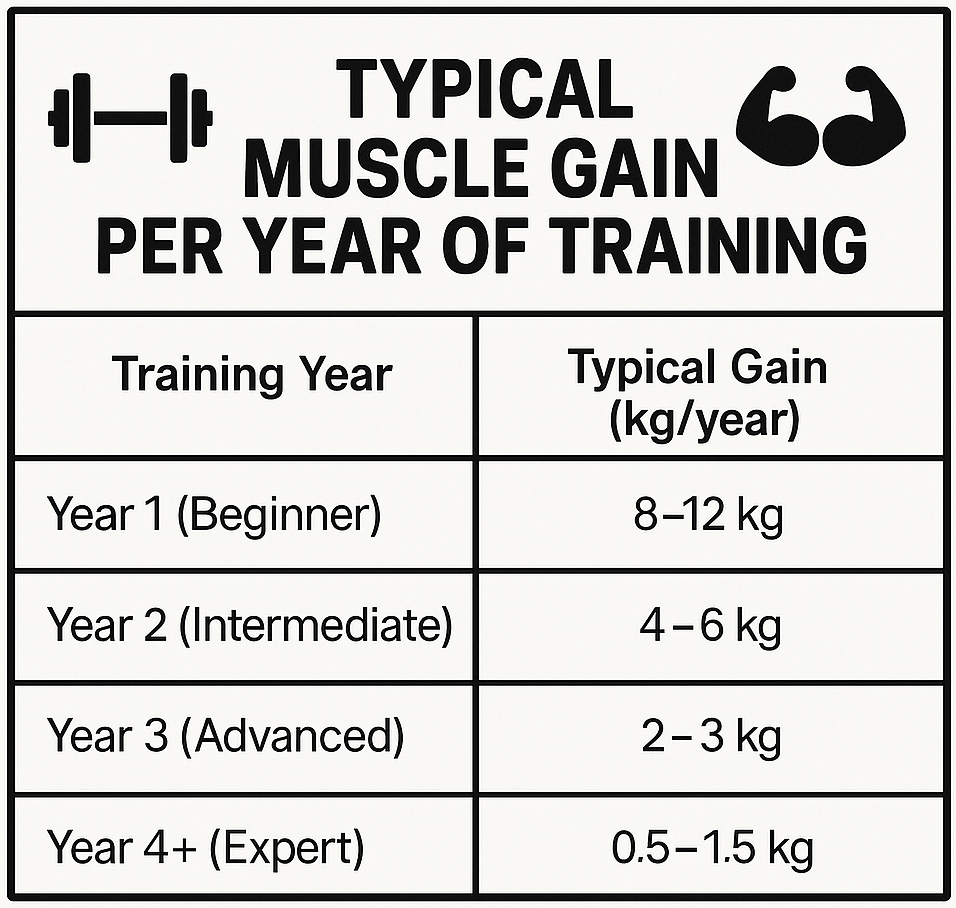
Most people can gain 8–12 kg of muscle in their first year of consistent resistance training, with yearly gains decreasing as experience increases. Genetics, age, sex, nutrition, and training consistency all influence your individual results.
Introduction
“How much muscle can I gain?” is a common question for anyone starting a fitness journey. Muscle growth is fastest in the first year of proper resistance training, but slows as you become more experienced. Knowing what’s realistic helps you set achievable goals, stay motivated, and avoid disappointment. This guide outlines what you can expect at each stage and how to maximise your muscle-building potential.
Understanding Muscle Gain: What’s Realistic and How to Achieve It
Muscle Gain by Training Age
The amount of muscle you can gain depends heavily on your training experience. Beginners see the fastest progress, while advanced lifters gain muscle at a much slower rate. Over time, the rate of muscle gain slows as your body adapts and approaches its genetic potential. Tracking your progress and adjusting your routine can help you continue making gains, even as you become more experienced.
- In the first year, it’s common to gain 8–12 kg of muscle with consistent training and nutrition.
- Intermediate trainees can expect 4–6 kg of muscle gain in their second year.
- By the third year, muscle gain slows to 2–3 kg per year, with further gains becoming smaller over time.
Factors That Influence Muscle Growth
Muscle gain isn’t just about how long you’ve been training. Your genetics, age, sex, nutrition, and training approach all play important roles in determining your results. For example, some people naturally build muscle faster due to higher levels of anabolic hormones or favourable muscle fibre composition. Paying attention to these factors can help you set realistic goals and optimise your training for your unique circumstances.
- Genetics play a major role in your potential for muscle growth.
- Age and sex affect hormone levels and recovery capacity.
- Nutrition, especially adequate protein, is essential for muscle repair and growth.
Realistic Expectations
Muscle gain is not linear, and progress often comes in spurts—especially after your first year. Most people will gain muscle faster at the start, with diminishing returns as they advance. It’s important to remember that muscle growth also depends on consistency, patience, and recovery. Comparing your progress to others can be misleading, so focus on your own improvements.
- Over a lifting career, men can typically gain up to 40–50 kg of muscle, while women can gain 20–25 kg, depending on genetics and other factors.
- After three years of dedicated training, incremental gains become much slower.
Maximising Your Muscle Gain
While genetics set your ceiling, you can get the most out of your potential by following evidence-based strategies. Consistency and progressive overload are crucial for ongoing results. Incorporating compound exercises and training each muscle group multiple times per week can help you make steady progress. Don’t overlook the importance of sleep, nutrition, and recovery for muscle repair and growth.
- Focus on compound exercises like squats, deadlifts, bench presses, and rows for overall growth.
- Train each muscle group at least twice per week for optimal results.
- Ensure adequate sleep and recovery to maximise muscle repair.
In Summary
Most people can gain muscle rapidly in their first year of training, but progress slows as you become more advanced. Focus on consistent training, good nutrition, and recovery to maximise your long-term muscle growth.
Setting realistic expectations and tracking your progress will help you stay motivated and make steady gains, no matter your starting point.
FAQ
How do I know if I’m gaining muscle and not just weight?
Muscle gain is often accompanied by some fat gain, especially if you’re eating in a calorie surplus. Track your progress with regular body measurements, progress photos, and strength improvements in the gym. If your clothes fit better and you’re getting stronger, you’re likely gaining muscle.
How can I maximise muscle gain as a beginner?
Focus on learning proper technique, train consistently with compound movements, eat enough protein, and aim for gradual increases in weight or reps. Beginners see the fastest results by sticking to a structured program and prioritising recovery.
How do I adjust my training as I become more advanced?
As you gain experience, muscle growth slows. Increase training variety by using different rep ranges, split routines, and advanced techniques like supersets or drop sets. Pay more attention to recovery and nutrition, as small details matter more at this stage.
How much muscle can women gain compared to men?
Women can gain significant muscle, especially in the first 1–2 years of training, but typically at about half the rate of men due to hormonal differences. Over a lifting career, women can expect to gain 20–25 kg of muscle, while men may gain 40–50 kg, depending on genetics and dedication.

