
Upper Body Muscles | Lower Body Muscles | Lower Back Muscles | Abdominal Muscles | Factors Affecting Recovery | FAQ |
Quick Answer
Most muscle groups require 2–5 days to fully recover after intense resistance training, depending on the muscle size, exercise intensity, and whether sets are taken to failure. Allowing for this recovery window supports muscle growth, minimises injury risk, and leads to better long-term results.
Introduction
Understanding the optimal recovery time for each muscle group is essential for maximising strength, muscle growth, and reducing the risk of overtraining. Scientific research and leading health guidelines show that recovery times vary based on muscle size, training style, and individual factors. Planning your workout split around these evidence-based windows helps you train smarter and achieve consistent progress.
Recovery Guidelines for Major Muscle Groups
Upper Body Muscles
Muscles like the biceps, triceps, lats, shoulders, and chest are involved in many daily movements and exercises. These groups generally recover faster than larger muscles, but still need sufficient rest to repair and grow.
- Upper body muscles typically need 48–72 hours of recovery after moderate to high-intensity resistance training.
- More intense sessions or training to failure can extend recovery to 72 hours or more.
Lower Body Muscles
The calves, glutes, hamstrings, and quads are larger muscle groups that handle heavier loads and take longer to recover. Soreness can last several days, especially after high-intensity leg workouts.
- Lower body muscles generally require at least 72 hours of recovery after strenuous resistance training.
- Strength-focused sessions can result in longer recovery times, particularly for beginners or after new exercises.
Lower Back Muscles
The lower back is heavily involved in compound lifts and stabilising movements. Because it supports so much of your training, it generally needs the most time to recover.
- Compound lifts involving the lower back may require up to 96 hours of recovery, especially after maximal effort.
- Health authorities recommend adequate rest and avoiding consecutive days of intense lower back training.
- Massage and active recovery can help speed up muscle repair and reduce soreness.
Abdominal Muscles
Abdominal muscles recover quickly due to their smaller size and frequent use in daily movement. However, they still benefit from rest, especially after targeted, high-intensity sessions.
- Abdominal muscles generally recover within 24–48 hours after moderate exercise.
- Core muscles can be trained more frequently if soreness is minimal, but rest is still important after challenging sessions.
- Light stretching and active recovery can reduce soreness and promote faster repair.
Factors Affecting Recovery
Recovery times are not the same for everyone. Age, nutrition, sleep, training intensity, and genetics all play a role. Listening to your body and adjusting your routine is essential for safe and effective progress.
- Training intensity and volume can extend or shorten recovery needs for any muscle group.
- Proper nutrition and hydration are essential for muscle repair and reducing inflammation.
In Summary
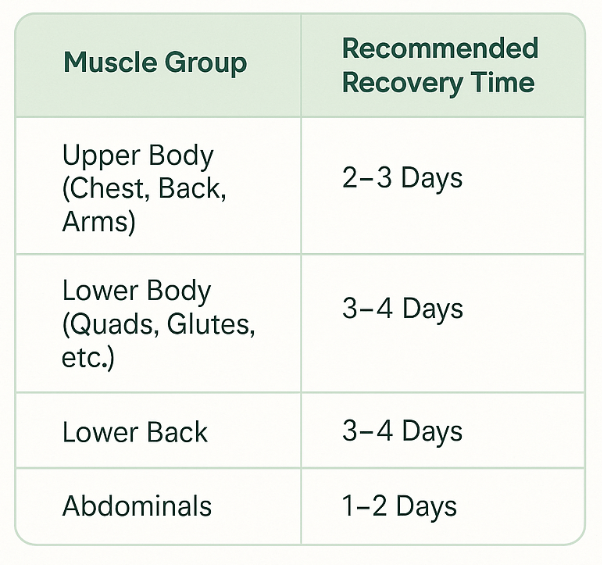
Give each muscle group enough time to recover. 2–3 days for upper body, 3–4 days for lower body, 4–5 days for lower back, and 1–2 days for abs. Adjust your routine based on soreness, performance, and overall wellbeing for the best results.
FAQ
How do I know when a muscle group is ready to be trained again?
A muscle group is ready when soreness has resolved, strength and range of motion are normal, and there’s no pain during warm-up exercises. If you still feel significant fatigue or weakness, allow at least another day of rest.
How can I speed up muscle recovery after a workout?
You can speed up recovery by getting 7–9 hours of sleep, eating enough protein and carbohydrates, staying hydrated, and using light stretching, massage, or active recovery (like walking or gentle cycling). These strategies help repair muscle tissue and reduce soreness.
How should I plan my weekly workout split for optimal recovery?
Structure your training so each muscle group has at least 48–72 hours of rest before being worked again. For example, alternate upper and lower body workouts, or use a push/pull/legs split. Include at least one or two full rest days per week for best results.
How do I adjust recovery times for age, experience, or workout intensity?
Older adults, beginners, or those doing very intense or new exercises may need extra recovery—sometimes up to 96 hours for large muscle groups. Increase rest if you notice persistent soreness, fatigue, or declining performance.
 Casually Healthy