
What Are Micronutrients? | Fat-Soluble Vitamins | Water-Soluble Vitamins | Macrominerals | Trace Minerals | FAQ |
Quick Answer
Micronutrients are vitamins and minerals your body needs in small amounts for essential functions like growth, immunity, and energy. They include fat-soluble and water-soluble vitamins, macrominerals, and trace minerals.
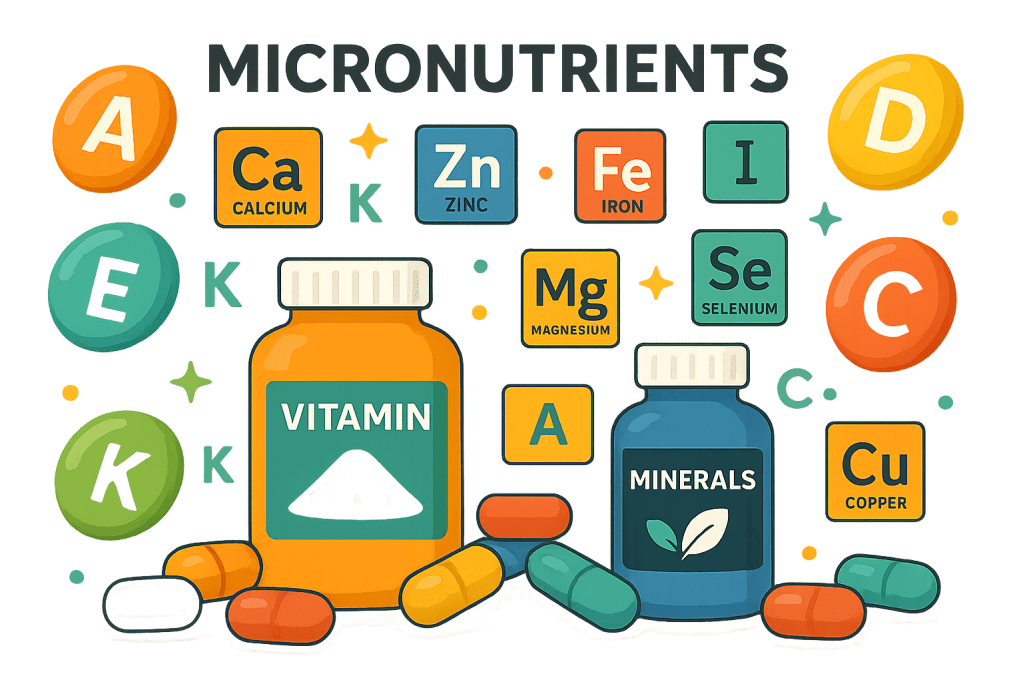
Introduction
Micronutrients are vital nutrients that your body only needs in small quantities, but they are crucial for health and wellbeing. Unlike macronutrients, which provide energy, micronutrients help regulate metabolism, support the immune system, and keep your organs working properly. Getting enough vitamins and minerals from a balanced diet helps prevent deficiencies and supports lifelong health.
Understanding Micronutrients: Types and Functions
What Are Micronutrients?
Micronutrients include all vitamins and minerals required by the body in tiny amounts. They do not provide energy but are essential for hundreds of bodily processes, such as making hormones, forming bones, and protecting against disease. Because your body cannot make most micronutrients, you must get them from food.
- Micronutrients are needed for growth, immunity, and metabolism.
- Deficiencies can cause serious health problems.
- Eating a varied diet helps you get all the micronutrients your body needs.
Fat-Soluble Vitamins
Fat-soluble vitamins dissolve in fat and are stored in the body’s fatty tissue and liver. They include vitamins A, D, E, and K. These vitamins are important for vision, bone health, antioxidant protection, and blood clotting.
- Vitamin A, D, E, and K are fat-soluble vitamins.
- They are found in foods containing fats like dairy, eggs, fish, and leafy greens.
- Too much or too little can cause health issues, so balance is important.
Water-Soluble Vitamins
Water-soluble vitamins dissolve in water and are not stored in the body, so you need to consume them regularly. They include vitamin C and the B vitamins (B1, B2, B3, B5, B6, B7, B9, and B12). These vitamins help with energy production, immune function, and red blood cell formation.
- Vitamin C and the B vitamins are water-soluble.
- Sources include fruits, vegetables, whole grains, and dairy.
- Regular intake is needed because the body cannot store these vitamins.
Macrominerals
Macrominerals are minerals your body needs in larger amounts compared to trace minerals. They include calcium, phosphorus, magnesium, sodium, potassium, sulfur, and chloride. These minerals are important for bone health, fluid balance, muscle function, and nerve signalling.
- Macrominerals are needed for bone strength, muscle contraction, and fluid balance.
- Sources include dairy, leafy greens, nuts, meats, and whole grains.
- Each macro-mineral has a unique role in keeping your body healthy.
Trace Minerals
Trace minerals are needed in very small amounts but are still essential for health. Examples include iron, zinc, iodine, selenium, copper, manganese, chromium, and molybdenum. They help with oxygen transport, immune function, thyroid health, and many other processes.
- Trace minerals are needed for immune health, hormone production, and metabolism.
- Good sources include meats, seafood, nuts, legumes, and whole grains.
- Even small deficiencies can affect your health, so variety in your diet is important.
In Summary
Micronutrients, including vitamins and minerals, are vital for your body’s growth, immunity, and overall health. Eating a wide variety of whole foods is the best way to meet your micronutrient needs and prevent deficiencies.
If you’re concerned about your intake, talk to a healthcare professional before considering supplements.
FAQ
How do I know if I’m getting enough micronutrients?
Eating a varied diet with plenty of fruits, vegetables, whole grains, lean proteins, and dairy usually provides all the micronutrients you need. If you have dietary restrictions or health concerns, ask your doctor about testing for deficiencies.
Can I get all my micronutrients from food, or do I need supplements?
Most people can get enough micronutrients from a balanced diet. Supplements may be helpful for some people with specific deficiencies or medical conditions, but they are not a substitute for healthy eating.
What’s the difference between fat-soluble and water-soluble vitamins?
Fat-soluble vitamins (A, D, E, and K) are stored in the body’s fat and liver, while water-soluble vitamins (B vitamins and C) are not stored and need to be consumed regular
Why are trace minerals important if I only need a small amount?
Trace minerals play critical roles in processes like oxygen transport, immune defence, and hormone production. Even a small deficiency can lead to health problems, so it’s important to eat a variety of foods.

