
What is Intermittent Fasting? | Popular Methods: 16:8 and 18:6 | Benefits of Intermittent Fasting | Tips & Considerations | FAQ |
Quick Answer
Intermittent fasting is an eating pattern that cycles between periods of fasting and eating. The most popular methods are 16:8 and 18:6, where you fast for 16 or 18 hours and eat during an 8- or 6-hour window. Research suggests intermittent fasting may support weight loss, improve cellular repair, and offer other health benefits.
Introduction
Intermittent fasting has become a popular approach for weight management and overall health. Instead of focusing on what you eat, it focuses on when you eat, giving your body regular breaks from digestion. The two most common versions are 16:8 and 18:6, which are simple to follow and can fit into many lifestyles. Scientific studies and user experiences suggest that intermittent fasting may help with weight loss, metabolic health, and even longevity.
Understanding Intermittent Fasting
What is Intermittent Fasting?
Intermittent fasting is a dietary strategy where you alternate between periods of eating and fasting. During the fasting window, you avoid food and calorie-containing drinks, but water, black coffee, and tea are generally allowed. The main goal is to give your body time to rest from digestion and potentially trigger beneficial cellular processes.
- Intermittent fasting is about when you eat, not just what you eat.
- The fasting window can be adjusted to fit your schedule and preferences.
- Many people find intermittent fasting easier to maintain than traditional calorie-restricted diets.
Popular Methods: 16:8 and 18:6
The 16:8 and 18:6 methods are the most widely used forms of intermittent fasting. In the 16:8 method, you fast for 16 hours and eat during an 8-hour window. In the 18:6 method, you fast for 18 hours and eat during a 6-hour window. Both methods can be repeated daily or several times per week.
- With 16:8 fasting, you might eat between noon and 8 p.m., then fast until the next day.
- 18:6 fasting involves a longer fasting period, such as eating only between 12 p.m. and 6 p.m.
- You can adjust your eating window to suit your lifestyle, making these methods flexible and sustainable.
Benefits of Intermittent Fasting
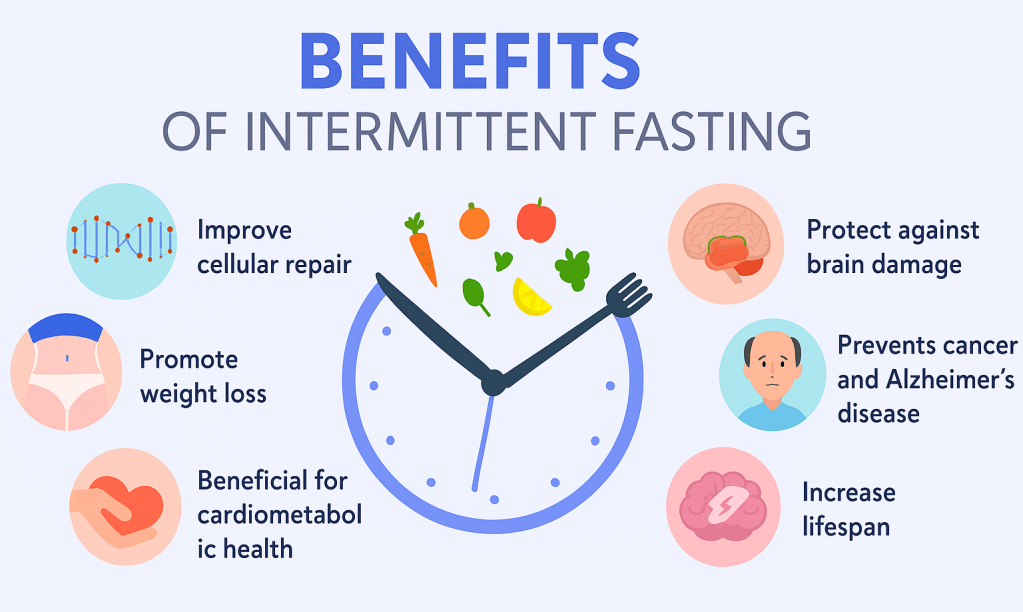
Intermittent fasting is linked to a variety of health benefits, supported by both research and user experiences. The attached image highlights several of these, and scientific studies reinforce many of the same points.
- Intermittent fasting can promote weight loss by reducing calorie intake and supporting fat burning.
- Fasting periods can improve cellular repair and may help protect against brain damage.
- Intermittent fasting can reduce inflammation, improve blood sugar control, and lower the risk of metabolic diseases.
- Some studies suggest intermittent fasting may increase lifespan and reduce the risk of cancer and Alzheimer’s disease.
Tips and Considerations
Intermittent fasting is generally safe for healthy adults, but it may not be suitable for everyone. It’s important to listen to your body, choose a fasting window that fits your routine, and focus on nutrient-dense foods during eating periods.
- Start gradually by increasing your fasting window over time, such as moving from 12:12 to 14:10, then to 16:8 or 18:6.
- Stay hydrated and choose whole, unprocessed foods during your eating window.
- Be aware of potential side effects, such as hunger, headaches, or irritability, especially in the early stages.
In Summary
Intermittent fasting, particularly the 16:8 and 18:6 methods, is a flexible and evidence-backed way to manage weight and support overall health. Benefits include improved cellular repair, weight loss, better metabolic health, and possibly longer life. Start slowly, listen to your body, and focus on healthy foods for the best results.
FAQ
Is intermittent fasting safe for everyone?
Intermittent fasting is safe for most healthy adults, but it may not be suitable for people with certain medical conditions, pregnant or breastfeeding women, or those with a history of eating disorders.
What can I drink during the fasting period?
Water, black coffee, and plain tea are generally allowed during fasting. Avoid drinks with calories or added sugar.
How long does it take to see benefits from intermittent fasting?
Some people notice benefits like improved energy or reduced hunger within a week, while weight loss and other health improvements may take several weeks.
Can I exercise while fasting?
Yes, light to moderate exercise is usually safe while fasting. Listen to your body and adjust your routine if you feel lightheaded or fatigued.

