
Glucose: The Body’s Default Fuel | Ketones: The Alternative Energy Source | Fasting and Ketone Adaptation | Benefits of Metabolic Flexibility | FAQ |
Quick Answer
Glucose is the body’s primary energy source, especially for quick, high-intensity needs and normal brain function. Ketones become an important alternative during fasting or low-carb diets, supporting fat burning, endurance, and cognitive health.
Introduction
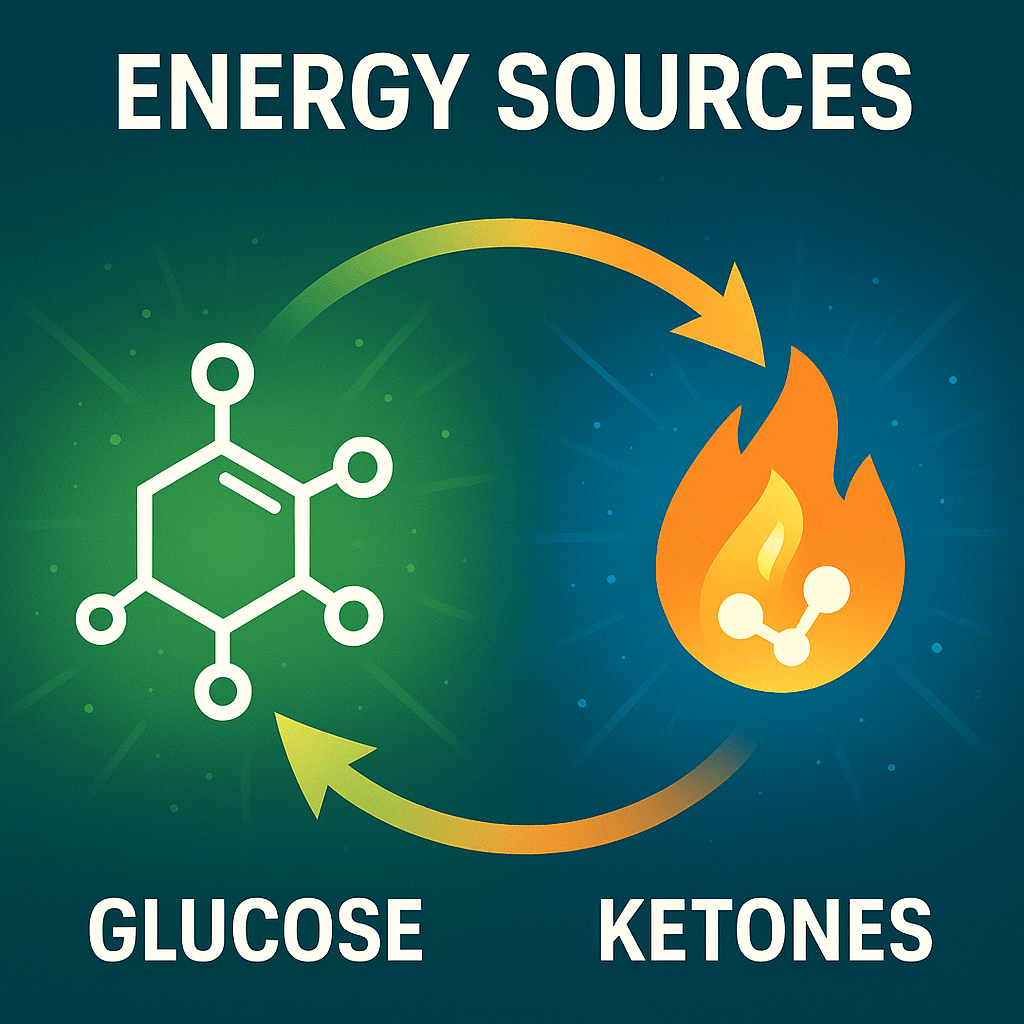
Your body can run on more than one type of fuel. Glucose is the default energy source, powering muscles and the brain during most daily activities. When glucose is scarce—such as during fasting or a low-carbohydrate diet—your body makes ketones from fat, providing a steady energy supply for both body and brain. Using both fuels at different times, known as metabolic flexibility, may offer unique health benefits.
Understanding Glucose and Ketones as Energy Sources
Glucose: The Body’s Default Fuel
Glucose is a simple sugar derived from carbohydrates and is the main energy source for most cells. It is especially crucial for the brain and for high-intensity exercise, as it can be rapidly broken down to meet immediate energy needs.
- Glucose is quickly available for short bursts of activity and mental focus.
- The brain relies on glucose under normal dietary conditions for optimal function.
- Most people use glucose as their main fuel unless carbohydrate intake is very low.
Ketones: The Alternative Energy Source
Ketones are produced by the liver from fat when glucose is in short supply, such as during fasting or a ketogenic diet. They serve as a valuable backup fuel, especially for the brain and muscles during endurance activities or prolonged calorie restriction.
- Ketones support fat burning and provide steady energy during low-carb intake.
- The brain can adapt to use ketones efficiently, which may improve cognitive function.
- Ketones are important for endurance and prolonged energy needs.
Fasting and Ketone Adaptation
When you fast or significantly reduce carbohydrate intake, your body becomes “ketone adapted.” This means it can produce and use ketones more effectively as a fuel source, supporting both physical and mental performance.
- Fasting triggers ketone production as glucose stores are depleted.
- Over time, your body and brain become more efficient at using ketones.
- Ketone adaptation may help maintain energy and focus during extended periods without food.
Benefits of Metabolic Flexibility
Metabolic flexibility is the ability to switch between glucose and ketones as energy sources. Research suggests that exposing your body and brain to both fuels may support long-term health and protect against neurodegenerative disease.
- Being able to use both glucose and ketones may reduce risk of neurodegenerative diseases.
- Metabolic flexibility can improve endurance and fat loss.
- Adapting to multiple energy sources may support brain health as you age.
In Summary
Glucose and ketones are both essential energy sources. Glucose powers quick, high-intensity activity and daily brain function, while ketones provide a steady backup during fasting or low-carb diets. Training your body to use both fuels may help protect your brain, improve endurance, and support overall health.
FAQ
When does the body switch from glucose to ketones?
Your body begins producing ketones when carbohydrate intake is very low or during fasting, usually after 12–24 hours without food.
Is it healthy to use ketones as a main energy source?
Yes, for most people, using ketones during fasting or low-carb diets is safe and can offer benefits for fat loss, mental clarity, and endurance.
Can the brain run on ketones alone?
The brain can use ketones for a significant portion of its energy needs during fasting, but still requires some glucose for optimal function.
How can I improve my metabolic flexibility?
Practices like intermittent fasting, low-carb diets, and regular exercise can help your body become more efficient at switching between glucose and ketones.
 Casually Healthy