
Understanding Melatonin | Benefits and Drawbacks | The 300mcg Solution | Life Extension Product | In Summary | FAQ |
Quick Answer
Melatonin is a natural hormone that helps regulate your sleep-wake cycle, but most supplements contain unnecessarily high doses that can cause side effects and disrupt natural sleep patterns. The optimal approach involves using low-dose melatonin (300mcg) in slow-release formulations that mimic your body’s natural production pattern, helping you fall asleep faster and stay asleep longer without next-day grogginess or tolerance issues.
Introduction
If you’ve ever struggled with falling asleep or staying asleep, you’ve likely encountered melatonin as a potential solution. This naturally occurring hormone has become one of the most popular sleep aids available, but most people are taking far more than their body actually needs. Understanding how melatonin works, its benefits and limitations, and the importance of proper dosing can transform your sleep quality without the drawbacks commonly associated with sleep supplements.
Understanding Melatonin
What Is Melatonin and How Does It Work
Melatonin is a hormone naturally produced by your pineal gland in response to darkness, serving as your body’s internal signal that it’s time to sleep. Your melatonin levels typically begin rising about two hours before bedtime, peak during the night, and drop in the morning to help you wake up naturally. This carefully orchestrated process regulates your circadian rhythm, the 24-hour internal clock that controls when you feel alert or sleepy.
- Learn about melatonin’s role as the body’s natural sleep hormone that signals bedtime preparation
- Darkness triggers melatonin production while light exposure suppresses it
Natural Melatonin Production Declines with Age
As you age, your body produces significantly less melatonin, which explains why older adults often experience more difficulty falling and staying asleep. Production can also be disrupted by factors including stress, shift work, jet lag, bright lights at night, and certain medications. This natural decline doesn’t necessarily mean you need large doses of supplemental melatonin to compensate.
- Recognize that melatonin production decreases naturally with aging and certain health conditions
- lifestyle factors like screen time and irregular schedules can disrupt natural production
Benefits and Drawbacks
The Science-Backed Benefits of Melatonin
Research demonstrates that melatonin can effectively reduce the time it takes to fall asleep, particularly for people with delayed sleep phase syndrome, jet lag, or age-related sleep difficulties. Studies show melatonin can reduce sleep onset time by approximately 4 to 25 minutes depending on the condition and individual factors. Beyond sleep, melatonin also provides antioxidant benefits and may support immune function and cardiovascular health.
- Use melatonin to reduce sleep onset latency in primary insomnia and circadian rhythm disorders
- Take advantage of melatonin’s antioxidant properties that protect cells from oxidative damage
- Consider melatonin for jet lag recovery when traveling across multiple time zones
Common Problems with Typical Melatonin Supplements
Most commercial melatonin products contain doses ranging from 1mg to 10mg or even higher, which can be 3 to 30 times more than your body naturally produces. These excessive doses often lead to next-day grogginess, vivid dreams or nightmares, and can actually disrupt your natural sleep cycle over time. High doses may also cause headaches, dizziness, nausea, and in some cases, morning drowsiness that impairs daily functioning.
- Avoid excessive doses that can cause next-day grogginess and sleep cycle disruption
- Be aware of common side effects including headaches, dizziness, and vivid dreams from high doses
The Tolerance and Dependency Concerns
While melatonin is not physically addictive like traditional sleep medications, taking high doses regularly can lead to psychological dependence where you feel unable to sleep without it. More importantly, excessive doses may interfere with your body’s ability to produce melatonin naturally, potentially creating a cycle where you need increasing amounts to achieve the same effect. Research shows that low doses are actually more effective and sustainable long-term.
- Recognize that melatonin isn’t physically addictive but psychological dependence can develop
The 300mcg Solution
Why Low-Dose Melatonin Works Better
Research consistently shows that doses as low as 0.3mg (300mcg) can be as or more effective than higher doses for promoting sleep, but with significantly fewer side effects. This microdose more closely mimics your body’s natural melatonin production, which typically peaks at around 300 picograms per milliliter in healthy adults. Lower doses work with your natural sleep mechanisms rather than overwhelming them.
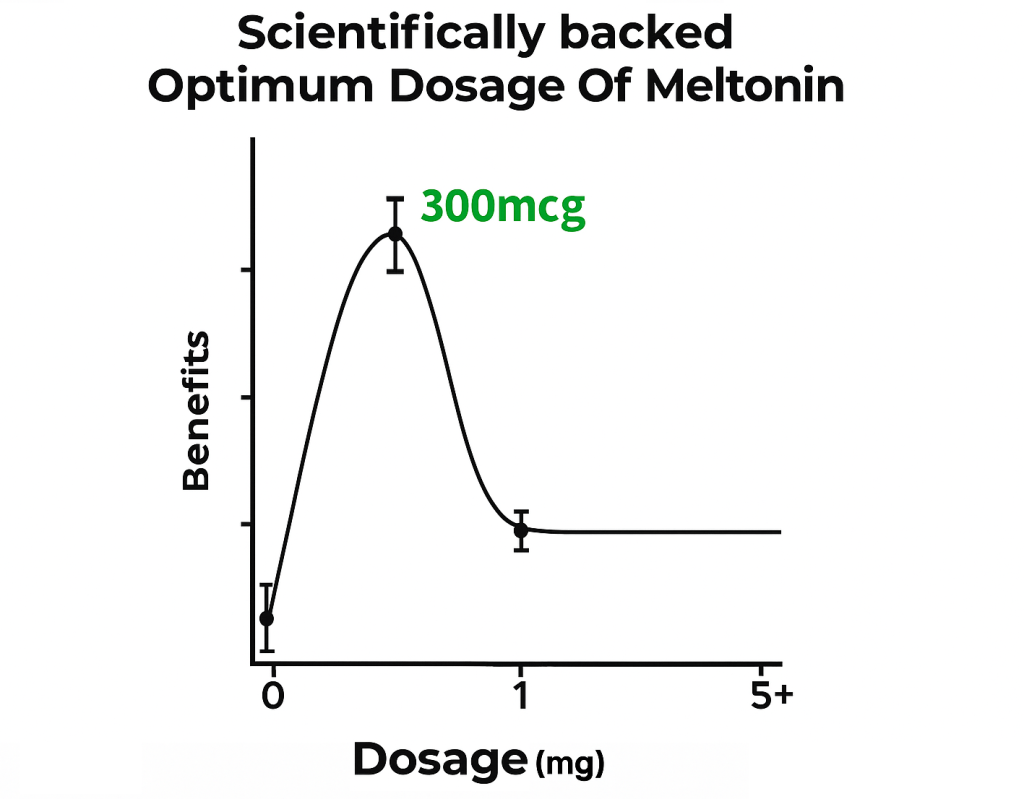
- Start with 300mcg doses that closely match natural melatonin levels for optimal effectiveness
The Importance of Slow-Release Formulations
Immediate-release melatonin is rapidly absorbed and cleared from your body within 4-6 hours, which may help you fall asleep but doesn’t provide sustained support for staying asleep throughout the night. Slow-release or extended-release formulations gradually release melatonin over 6-8 hours, better mimicking your body’s natural overnight melatonin profile and helping maintain sleep without early morning awakenings.
- Choose slow-release formulations that better mimic natural overnight melatonin patterns
- Prolonged-release melatonin improves sleep quality and morning alertness
- 6-hour release provides optimal coverage for a full night’s sleep
Optimal Timing for Maximum Effectiveness
Taking melatonin at the right time is crucial for its effectiveness. Research suggests that taking melatonin 30 minutes to 2 hours before your desired bedtime works best, with some studies showing that advancing the timing to 3 hours before bedtime may optimize results for falling asleep, rather than staying asleep. This timing allows melatonin levels to rise gradually, signaling to your body that sleep time is approaching.
- Take melatonin 30-60 minutes before bedtime for optimal sleep onset timing
- Maintain consistent timing to support your natural circadian rhythm
Life Extension Melatonin Product
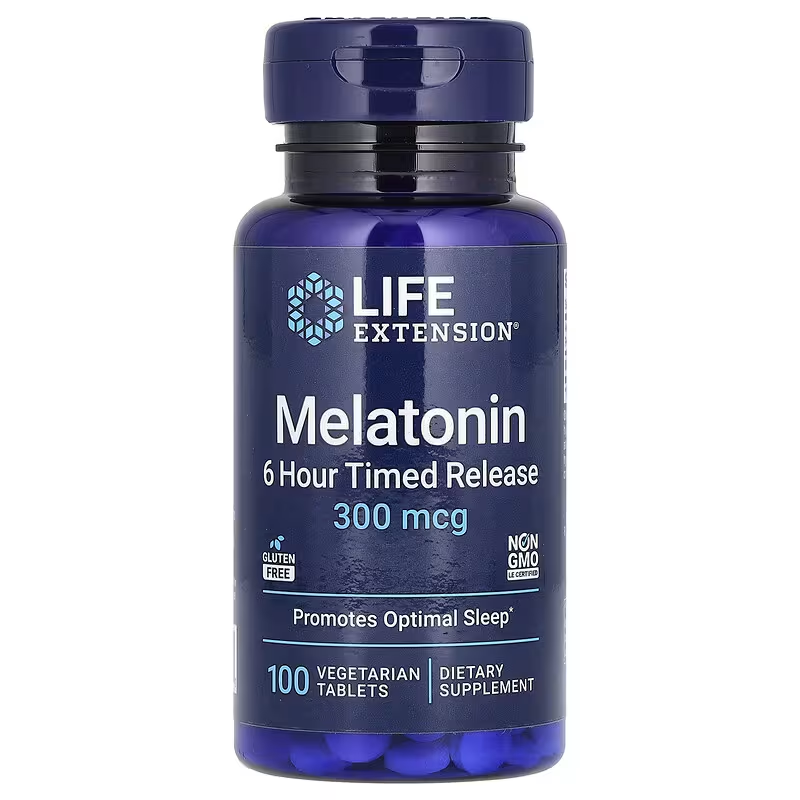
Life Extension Melatonin 6 Hour Timed Release 300mcg
Life Extension’s 300mcg 6-hour timed release melatonin addresses the key limitations of typical melatonin supplements by providing a physiologically appropriate dose in a formulation designed to mirror your body’s natural melatonin production curve. This pharmaceutical-grade supplement releases melatonin gradually over six hours, helping you both fall asleep and stay asleep without morning grogginess or the tolerance issues associated with higher doses.
- Experience gentle sleep support with a low 300mcg dose that works with your natural sleep mechanisms
- Benefit from 6-hour sustained release that provides all-night sleep maintenance
- Pharmaceutical-grade quality from a trusted manufacturer with rigorous testing standards
How This Product Overcomes Common Melatonin Problems
The Life Extension 300mcg formula specifically addresses the issues that make many people frustrated with melatonin supplements. The low dose prevents the next-day grogginess and sleep cycle disruption common with higher doses, while the slow-release mechanism ensures you don’t wake up in the middle of the night as the melatonin wears off. This approach supports your natural sleep architecture rather than overwhelming it.
- Avoid next-day drowsiness with the optimal 300mcg dose that clears your system by morning
- Prevent middle-of-night awakenings with sustained release technology
- Maintain natural sleep cycles without disrupting your body’s own melatonin production
Safety Profile and Long-Term Use
This low-dose, slow-release formulation has an excellent safety profile and is appropriate for most adults seeking sleep support. Research on prolonged-release melatonin shows no evidence of tolerance development, withdrawal symptoms, or suppression of natural melatonin production even after 6-12 months of continuous use. The 300mcg dose is well below levels associated with significant side effects while remaining therapeutically effective.
- Use safely for extended periods without developing tolerance or dependence
- Experience minimal side effects due to the physiologically appropriate dosage
- Maintain natural melatonin production while using supplemental support
In Summary
Melatonin can be an effective sleep aid when used correctly, but most people are taking far too much and in the wrong formulation. The key to successful melatonin supplementation lies in using low doses that mirror your body’s natural production, delivered in slow-release formulations that provide sustained support throughout the night. Life Extension’s 300mcg 6-hour timed release melatonin offers an optimal solution by addressing the common problems with conventional melatonin supplements while providing gentle, effective sleep support that works with your natural sleep mechanisms rather than against them. This approach allows you to enjoy better sleep quality without the side effects, tolerance issues, or disruption to natural sleep cycles that often accompany higher-dose formulations.
FAQ
Why is 300mcg of melatonin better than higher doses like 3mg or 5mg?
Research shows that 300mcg more closely matches your body’s natural melatonin production levels, making it more effective for long-term use without side effects. Higher doses can overwhelm your natural sleep mechanisms, cause next-day grogginess, and may actually disrupt your circadian rhythm over time. Studies consistently demonstrate that lower doses are often more effective than higher ones for promoting healthy sleep patterns.
How does slow-release melatonin differ from regular melatonin supplements?
Slow-release formulations gradually release melatonin over 6-8 hours, mimicking your body’s natural overnight melatonin pattern. Regular immediate-release melatonin is absorbed quickly but cleared from your system within 4-6 hours, which may help you fall asleep but often leads to middle-of-night awakenings. The sustained release provides all-night coverage for both sleep initiation and maintenance.
Is it safe to take melatonin every night long-term?
Low-dose melatonin (300mcg) in slow-release formulations appears safe for long-term use based on available research. Studies show no evidence of tolerance development, withdrawal symptoms, or suppression of natural melatonin production even after 6-12 months of continuous use. However, it’s always best to consult with a healthcare provider about your individual situation and sleep needs.
What makes Life Extension’s melatonin different from drugstore brands?
Life Extension uses pharmaceutical-grade manufacturing with rigorous quality control, ensuring accurate dosing and purity. Their 300mcg 6-hour timed release formula is specifically designed to mirror natural melatonin production patterns, while many drugstore brands contain excessive doses (3-10mg) in immediate-release formulations that can cause side effects and don’t provide sustained sleep support throughout the night.

